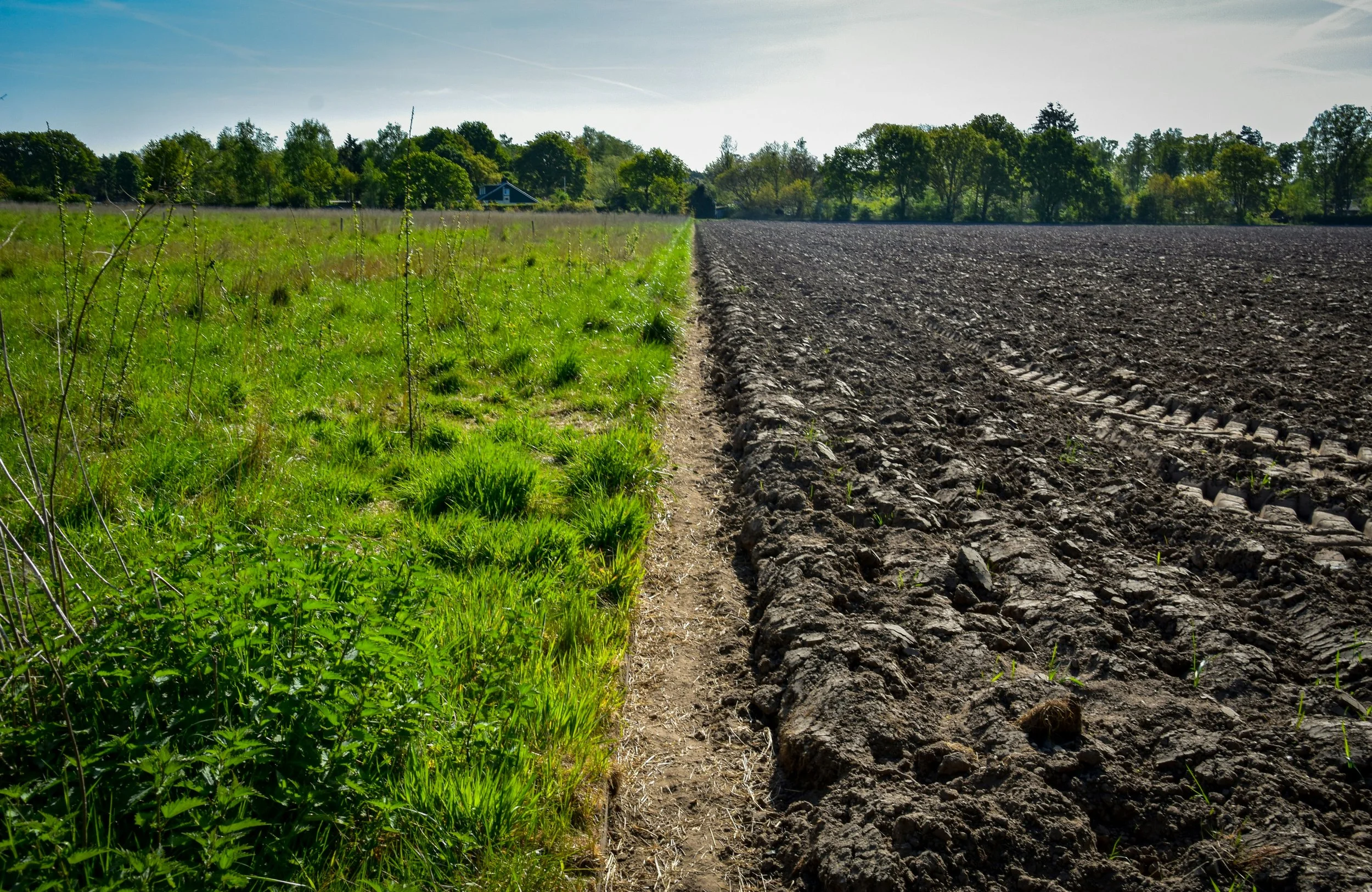
Regenerative Agriculture: Why It Matters Now. Unlocking Nature’s Own Repair System
A System Under Growing Pressure
Across farming regions worldwide, the same patterns are emerging. Soils dry out faster than they used to. Rain arrives at the wrong time, in the wrong quantity, or not at all. Input costs are increasingly volatile, yet yields feel less predictable. Farmers describe “tired soils” and land that no longer rebounds after stress. These observations are not anecdotal. They reflect a broader systemic shift already documented by global assessments.
The Food and Agriculture Organization estimates that roughly one third of the world’s soils are already moderately or severely degraded. The Intergovernmental Science-Policy Platform on Biodiversity and Ecosystem Services goes further, estimating that more than three billion people are already experiencing the consequences of land degradation. What was once framed as a future risk has become a present constraint.
This convergence of climate volatility, rising input costs, and declining soil function is why regenerative agriculture is no longer a niche conversation. It is increasingly viewed as a practical response to a system under strain.
What Regenerative Agriculture Actually Means
At its core, regenerative agriculture focuses on restoring soil function rather than compensating for its loss. The principles themselves are not new. Keep soils covered to protect them from heat and erosion. Reduce disturbance so soil structure and microbial networks can recover. Rebuild organic matter to feed biological processes. Increase plant and root diversity to strengthen resilience.
These practices have been applied in different forms for generations, adapted to local climates and cultural landscapes. What has changed is the scale of degradation and the frequency of climate shocks. When soils lose structure and organic matter, water infiltration declines, microbial life diminishes, and roots struggle to establish. Each weather extreme compounds the damage, making recovery harder over time.
What the Evidence Shows
Case studies from around the world illustrate both the potential and the limits of regenerative approaches. In the US Midwest, farmers using cover crops have recorded improvements in soil structure, infiltration, and organic carbon. In parts of Brazil and Argentina, reduced tillage paired with diverse rotations has helped stabilize erosion-prone soils. In Europe, early findings from regenerative farming networks show meaningful productivity gains where soil cover, photosynthesis, and root diversity are restored. Agroforestry systems in East Africa demonstrate how integrating trees with crops can regenerate degraded land while expanding livelihood options.
The pattern is consistent. When ecological foundations improve, productivity often follows. Water retention stabilizes, nutrient cycling becomes more efficient, and systems become less sensitive to weather extremes. Working in alignment with natural processes tends to reduce volatility rather than amplify it.
If It Works, Why Is Adoption Still Limited?
If the benefits are so clear, a common question follows. Why are regenerative practices not more widely adopted?
One reason is that regenerative agriculture does not come as a universal template. What works in deep loam under consistent rainfall may not translate to sandy soils that receive only a few erratic rain events each season. Farmers need locally calibrated guidance on which cover crops to plant, when to plant them, how to integrate them into rotations, how residues will break down, how labour is affected, and how all of this intersects with markets. That complexity creates friction, particularly for smaller operators with limited advisory support.
Financial risk is another major barrier. Transition periods can be uneven. Yields may fluctuate before stabilising. Cover crops may fail to germinate in the first seasons. Residues may decompose more slowly than expected. Larger operations can often absorb this uncertainty. Smallholders and Indigenous communities often cannot. A single poor season can trigger debt, lost income, or food insecurity. Asking farmers in that position to take on additional risk without support is unrealistic.
Policy and market structures can further reinforce inertia. Subsidies, insurance products, and procurement systems often reward uniformity and input-intensive systems rather than diversification. Even skilled regenerative farmers can struggle when processors require rigid delivery schedules or standardised outputs.
Cultural factors also matter. Farming knowledge is built over decades and often passed between generations. Introducing new practices can feel like questioning hard-earned experience. Many operators watch cautiously from the sidelines, waiting for proven examples within their own ecosystem before shifting. This caution is rational in a high-risk industry.
The Missing Layer: Lowering the Cost of Change
These realities point to a missing layer in the regenerative agriculture conversation. Regenerative practices alone do not scale if the transition remains risky, complex, or expensive.
Lowering barriers to entry means providing options that integrate into existing systems rather than requiring wholesale change. It means supporting early plant development so crops and trees establish more reliably under variable conditions. It also means making tools accessible to communities with limited capital, infrastructure, and extension support.
Technology has a role to play here, not as a replacement for regenerative principles, but as a complement to them. The objective is not to override natural processes, but to strengthen them where soils or climate conditions are already compromised.
Phi Earth’s Role in the Regenerative Ecosystem
Phi Earth’s regenerative framework, known as Phi Tech, is designed around this enabling layer. Rather than prescribing a full system overhaul, Phi Tech focuses on strengthening seeds and young plants at the earliest stages of growth. It combines biological inputs, enzyme components, and controlled physical stimuli applied to soil and plant material during germination and early development.
The premise is straightforward. Strong early development leads to deeper, better-structured root systems. Plants with robust roots are better equipped to tolerate stress, interact with soil biology, and maintain growth during irregular weather. Because the intervention occurs at the seed and seedling level, it can be integrated into regenerative, conventional, or hybrid systems without requiring new machinery or major infrastructure changes.
This low-input approach is particularly relevant for smallholders and Indigenous communities facing climate extremes, limited extension services, and financial constraints. By operating within existing routines, the technology aims to reduce adoption risk rather than add to it.
Expanding the Regenerative Toolbox
Regenerative agriculture is gaining momentum because it restores function and resilience to landscapes under pressure. At the same time, landscapes differ, and so do the combinations of practices that work best. No single method applies everywhere.
The priority, therefore, should be to expand the range of practical tools available to farmers and land stewards. Tools that improve early vigour, stabilize establishment, and enhance nutrient efficiency can sit alongside regenerative practices and strengthen their outcomes, especially in challenging environments.
For communities most exposed to climate pressure and land degradation, access to such tools can make the difference between experimentation and inaction. The more practical options available, the easier it becomes to rebuild resilient agricultural systems while maintaining productivity.
Regeneration is not about returning to the past. It is about restoring function in the present, using approaches that respect local context and reduce risk. As adoption grows, success will depend less on ideals and more on whether systems are supported to perform under real-world conditions.
Reading time: ~10 mins
Author: Phi Earth Technologies